Session 1: Pre-Production and Scriptwriting – Rebecca Mark-Lawson, Paul Fraser & Caroline Cooper Charles
On the first full session of the BFI film academy I took part in two scriptwriting masterclasses and a production masterclass. In the first scriptwriting masterclass, Shane Meadows’ regular collaborator Paul Fraser did an exercise with us that gave us an insight into how stories are created. He also went through with us the typical outline of a film which is what we recreated in the exercise. On the tables we were sat on, we had to write a short paragraph about ourselves. We then had to pass this round where the next person would have to expand on what was written. Eventually, a problem would arise that the next person would resolve. The last person concluded everything that had been written. In this exercise in a short amount of time we created a template of a story. This exercise taught me the structure of which most films follow.
In the production masterclass, a local producer called Caroline Cooper Charles went through the extensive process of getting a film made and then subsequently actually creating it. In this exercise, I learned lots because as wasn’t aware of how much needs to be done in pre and post production. I also wasn’t aware there was a pre pre-production.
In the final exercise which was all about finding out how scripts work and how they are written. We was given a script to a short film which allowed us to see how a script is brought to life. We also analysed the short film as a group. I learned lots in this session because I wasn’t aware how much information needed to be put into a script that isn’t dialogue. Rebecca Mark-Lawson who led the masterclass informed us of a website called Celtx where you can view the scripts from famous movies. This is where I massively need to develop understanding a lot more in depth how scripts work and how to write good scripts. The best way for me to do this would be by going onto that site and reading lots of different scripts. Me as the director of the film and Dillon as the screenwriter will have to collaborate to create a script that is filled with entertaining dialogue and scenes but at the same time one which can be realistically filmed successfully. Also, it needs to be a script with which both of us and the rest of my group are happy with. Constance, the producer will have the responsibility of getting us whatever props we will require on the day and creating us a risk assessment to ensure our production is a safe one.
Session 2: Cinematography – Daren Eagles & Rob Speranza
In the second session of the BFI film academy, it was all about cinematography. For the first part of the session, we had a masterclass on the art of cinematography and how filming works. We leaned in this session about the effect that a certain shot can have on the audience and on the film as a whole. I leaned lots in this session as I knew next to nothing about how cinematography works. For the rest of the day, we got into our groups that we are in and had a go ourselves with cameras. The guy who spent the day with our group assigned us all roles, I was assigned the role of camera man. I was shocked at how difficult is with the camera to be successful with it. The respect I have for the best cinematographers went up enormously because I realised how difficult it is to produce what you see on the big screen. We also as groups leaned how to successfully put up a camera on a trip pod and take it down.
The last part of the day was all about learning about how sound works and having a go ourselves at using microphones when recording. For the last part of the day, I was the person holding the microphone during filming. Again, I didn’t realise how difficult it were because you have to tread a fine line between picking up the best sound possible, whilst at the same time avoiding getting the microphone or the wires into the shot. We had to demonstrate good team work for the majority of the day by deciding the angles we wanted to film from and how zoomed in we wanted the camera to be. I definitely need to develop my camera skills and sound skills. The best way to do this will be my simply practising and having a go myself.
The knowledge I learned today will definitely stay with me as have learned what effect a certain angle or camera type can have on the audience. It became very clear today that every camera shot has to be closely chosen as it is has to serve some kind of purpose. The shot can convey an emotion to the audience. I do have ambitions of working in the film industry and today was a big learning curve in finding out how technical filming with a camera is. I am already quickly learning on this course how much work and detail is required from every aspect of productions. Therefore, if I want my ambitions to come true of working in the industry, I cannot neglect any aspect of filmmaking and must try to develop in all areas of it, if I am to stand any chance of making it in the film industry.
Session 3: Directing Masterclass – Richard Heap
In the third session of the BFI film academy, we watched Richard Heap’s debut full feature film, the runaways. Afterwards, we had a q and a with Richard where we got valuable insight into what actually making a feature film is like and especially one on a small budget. In the q and a I learned lots of different things I never knew. I had always wondered how working with kids on film sets works and Richard provided me with a definitive answer to that. Richard explained that they could only have the kids for a restricted amount of time and had to have a teacher with them. He spoke as well about when they would forgot their lines and he would try to make them feel at ease and how he would collaborate with them for some improv. He also spoke about how for example for the filming on the steam train, how you obtain permission to do this.
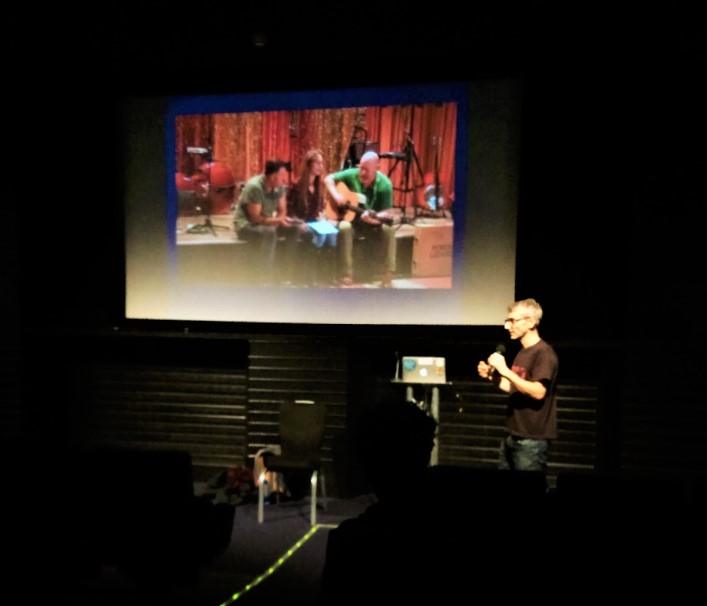
He also spoke about which was really interesting the restraints you are under during filming such as adverse weather conditions and shooting scenes with two actors who aren’t really both there together during filming to shoot that particular scene. I found listening to Richard incredibly engaging as this was someone who had made a film that was of real quality under very difficult restraints whilst having no experience himself. That’s why I believe it was so encouraging watching the film and listening to him because this is someone who before this had no previous experience of writing and directing and who had done a great job in such a short period of time. He spoke about as well the use of camera and music and the effect it has on the audience to convey a certain mood or tone. He did however as well spoke of the difficulty he is having distributing his film post production which is really discouraging because the film he had made was a really good one and featured some really well known actors. He said he believed this maybe was because no one in with any contacts or stature in the film industry had financed the film. He did say though there wasn’t really any alternative as more than likely the film would have never got made if it wasn’t for the route they took. With the quality the film possesses, it can surely only be inevitable that the film gets seen by lots of people.
Due to how engaging and educational Richards Q and A was for a budding filmmaker, I will definitely be keeping my eye out now in the future for things similar. With the amount I learned from Richard, it is clear that q and a’s and events similar offer valuable knowledge and experience for aspiring filmmakers. After the q and a, in our groups we started making progress on our ideas and script for the short film we are making. We as a group in the time we were together made great progress on the idea for our film. We had an initial idea but once we had decided on how that idea would come together, the ideas began flowing.
Session 4: Editing Masterclass – Jim Wraith and Daren Eagles
In the fourth session, it was all about editing. In pairs, we got the opportunity to edit ourselves. At the beginning of the session, we were told all about editing and the different ways it can be used. It was explained to us how to actually edit on the software that we were going to be using on the day of the session and when it comes to actually editing our films. In pairs, throughout the day we had a go at editing the clips that were provided and some of the filming we did on week two. In today’s session, I learned how difficult editing is because when you watch feature films, the whole film runs incredibly smoothly. However, in reality the work that needs to be done to get to that stage is massive. In my pair, we tried to make all of the clips we were editing run in an order where it would be most effective and enjoyable for someone watching it. To get to this stage, this included shortening some of the clips and taking sound out of some of it. My editing skills definitely need developing I would be very disappointed if our finished film looked anything like what I had edited at the end of this session. Although, saying that we were limited with what we could do with the clips and when we are filming we have the freedom to do what we want.
 Josh Allott Director's Blog
Joshua, this is really great stuff. You’ve directly explained how the exercise Paul Fraser gave you developed your understanding of creating a narrative within film. The name of the Producer to whom you are referring is Caroline Cooper-Charles, and Rebecca Mark Lawson led the script masterclass in the afternoon session. It would be great if you could use their names! The website is called Celtx. How, as the Director of your team’s film, will you work in collaboration with Dillon, your scriptwriter, to ensure that his vision, as well as yours, are both met in this joint creative project? What will Constance, the Producer’s, role been in facilitating this relationship?
Great stuff on sound and cinematography. It sounds like you really learned a lot in these particular masterclasses. How will this new knowledge shape the way you approach working in the film industry? Do you have plans for a career in the film industry?
You mention the difficulties of working with children on set. Could you please explain some of these difficulties, and how you would overcome them?
Glad to hear you found Richard engaging — so did I! He was in a similar position to yourself, having never made a feature film before, and it’s inspiring to see what can be achieved on a low budget by collaborating with your friends. You’ve thoroughly discussed the way Richard’s knowledge has helped you to develop your own knowledge. If this Q&A helped, would you think about other director’s Q&A’s? Would there be a free way to see Q&As so you can overcome travel costs / ticket costs to do this?
LikeLike