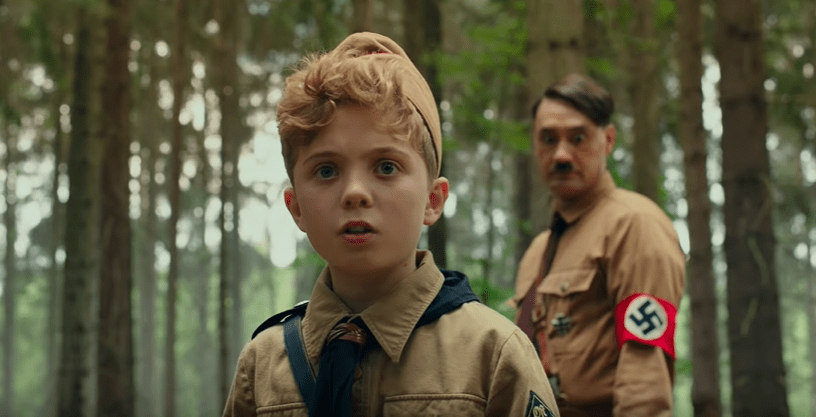
Today’s session at the BFI film academy was the first back after Christmas and it was also the first since the shoot day. In the morning at the showroom, we watched Jojo Rabbit which I thoroughly enjoyed. I thought it was a masterpiece and I had never seen one of Taiki Waititi’s film’s before but had heard good things, now though I would like to watch all of his previous films after been left very impressed by Jojo Rabbit.
After watching Jojo Rabbit, we watched a local short film with Amy from the BFI that had been made on a tiny budget and as a group shared our thoughts on the film. There were lots of basic errors made in the film such as sound issues and in one shot the camera in shot off the reflection of the mirror. The story was also muddled to those watching, a combination of reshoots and some more editing are in need. Watching the film only highlighted the importance of post production and editing. After lunch Amy O’Hara, who works as a Talent Executive for the BFI and is in control of giving out funding in our local area, came in to speak to us. She had come in to explain the opportunities that are available after the course and that we after the course will be eligible to apply for funding for a short. We watched four shorts to begin with, some of them I enjoyed far more than others. A theme I did notice from the shorts is that they were all on the quirky side. Some advice that has been told to us throughout the course and which was reiterated again today by Amy and by Sam was to watch as many shorts as possible. This is something that I need to do familiarise myself with the world of shorts and trying to work out what makes a successful short.
I learned in this session, from Amy, the range of opportunities on offer after the course such as networking events, apprenticeships/scholarships and short film nights. The opportunity and potential as well that we can apply for funding is exciting. I like to think that is an opportunity that in the future I will be capitalising on. At the very end of the day we had a quick chat with our filming groups outlining a plan for the shoot day. We had to work together as a group outlining and making decisions on matters such as the tone of the film, music/sound effects and the colour of the film. We decided that our film is a silly overly dramatic comedy. We decided as well that we would try and find before the edit day a piece of romantic music for the date scenes and a more suspenseful piece for the end of our film. We also need to try to find something appropriate for the opening shot of our film. The colours of the film we decided to have a play around with on the edit day and see what colour types are most effective and what mood a set of colours convey.
Today’s session at the BFI film academy was the shoot day for our short film. After our group had been handed our filming we were free to start filming. Every group had someone assigned with them to assist the group throughout the day, my group had locally based director and producer Rob Speranza. If there was one thing I learned today it is that as a team you have to be decisive. For a fair while after we had begun filming, me and my group were making slow progress as we were spending too much time talking over decisions. Rob gave us the motivation we needed to start being more decisive and provided us with inspiration that a master shot would be a good idea and would make the editing process easier.
My role for the day was director, however as I was acting I didn’t get the opportunity to do as much directing as I would have hoped. I did still have my moments where I did get the opportunity to do some though. Constance, the film’s producer seemed to when I was on camera step up to provide direction. There were times when filming where I would take a look at the camera to see where it was and provide my thoughts on where it should be. There were times when I couldn’t do this as my group needed me on camera to work out how to get the best shot. We did work as a group pretty well throughout the day with everyone sharing their ideas, it was a collaborative process.
The vast majority of our filming was in the same place, the showroom café. For the first few hours, another group were filming in it as well. Therefore. as a group we decided to film first the shots which we were going to add voice over to. This was so that the scenes that had dialogue we could film without the potential of being able to hear the other group on our shots. It was after we had done this, that Rob gave us the idea of the master shot. That was what we did next, we filmed the vast majority of our film bar the beginning that took place outside and the ending in long takes. After we had completed this, we started filming shots where the camera was either focusing on me or Dillon who was the other actor in our film.
One of the things I learnt during today was what a master shot was, I had never heard of the term before. I can definitely see the benefit of it making the editing process easier. Once, we had filmed all of the scenes apart from the start and end with all the angles we wanted, it was time to film the ending. In this scene Dillon’s character would die and hit his head on the table and blood would trickle out of his mouth. Jelly and cranberry juice is what Constance used to create the fake blood. When filming this scene, Dillon needed to chew on the jelly a bit to enable it, to be able to trickle out of his mouth. Dillon mastered this very quickly, the jelly falling out of his mouth and this allowed us to film this scene a lot quicker than we had anticipated. After every attempt at that shot though, the table and Dillon’s mouth would need a clean ready for the next attempt. The last shots that we filmed were the one where my character arrives for his blind date with the other character and the opening shots outside. As the shoot day, was on a Saturday and Sheffield was very lively, we decided to capitalise on this by filming a shot of the city itself in all it’s glory. The last shot we filmed was my character walking to the restaurant where the date was taking place. This taught me of the difficulties you have to face when filming outside because even though we were only filming outside for a short time, when you are filming in a space as busy as what it was and lots of noise, it can be difficult to get the right shot. You may have to be patient to get the shot you are after.
The last thing that we needed to film was me doing the voice over for my character’s inner thoughts. Rob provided me with inspiration how I should say the lines in the script. This part of the day took me massively by surprise as I was completely shocked with how difficult it can be to get the perfect attempt at the line. Again, you may have to be patient and have a play around to see what is working and what isn’t. My group provided me with feedback when they were happy with the voice work I had done. I had never done voice acting before and in hindsight I would perhaps have done some preparation for this part of the day to improve my performance. I could definitely develop my voice acting skills. Meanwhile, the best way to develop my directing skills is to keep doing it. Like I said, I didn’t do as much directing as I’d liked, however just being involved in a day of filming taught me a lot about directing. As a director, you get the luxury of seeing the bigger picture, you have to use this to pass on information and provide inspiration for your actors. If I didn’t act, I would’ve had the opportunity to do more directing but my group thought I would be good for the role and we did try sourcing an external actor, but couldn’t get one. The day also taught me how precious time is when filming. As a film crew, you simply can’t afford to waste time. The more time you waste, the harder it is in the editing process and the harder it is to get the right shot.
Today was the edit day for our short films. As the director of the film, I had to work closely with the editor (Michael Wheeler) all day to edit our film so that it could be the best version our film could possibly be. One thing that I learnt today was how much editing is needed for footage that on the day you would have thought would require little to none editing if it was used in the actual film. However, when you are watching the footage back on some of it, there is background noise like on some of our footage you can hear football fans from outside. For the footage of the film which we used where there is some background noise, there is music over it. Whilst, me and Michael were editing the rest of my group made the credits and searched for copyright free music that would work well with our film. Once, they had done this, they assisted with the editing process. Me and Michael put together what we thought was the best footage all way through and then after we had footage of all of our film, we went back to iron out the problems that needed amending.
Our film features voice over and some of the voice over, we were able to seamlessly work with the footage however one in particular was challenging to make it work well with the footage. In the case of this voice over as it was pretty crucial to the story, it wasn’t really an option to leave it out. Therefore, as a group we just had to make the decision over putting the voice over onto which footage we felt worked best.
Once, we had put through footage of our film all way through, we added music to our film that the rest of our group had found. We decided that the music should play all the way through our film, however it should stop when the knife drops and at the end when one of the characters dies. We thought this was a good idea because the music stopping informs the audience that something impactful is around the corner and the music wouldn’t be a distraction in the film’s more crucial moments. Me and Michael also amended the volume of the voice overs as it was much louder than the rest of the film. There were a few shots as well that we needed to make them smoother transitions between shots. There was one close up as well which was really good but we felt that we couldn’t use it as the background on the close up was different to the other shots from the part where the character was making these facial expressions. Therefore, this is one area that I need to develop on spotting issues such as this whilst filming because the close up was a great shot that would have worked well in our film but unfortunately, me and Michael felt it would stand out too much.
Another major issue we had to contend with on the day was a line we couldn’t use because it was against BFI Film Academy guidelines. We re-recorded Dillon saying a new line however in the end, we had to leave it out as we couldn’t make it fit with the footage we had. This was a great shame as it was a part of our film that we thought worked really well. We couldn’t put it onto the footage, we had as the new line was considerably shorter than the old line. The only footage we had where the line would fit in was the footage where it was meant to be but because the new line was shorter, the footage didn’t work so in the end we had to leave it out all together. We were playing around with this trying to make it work right till the end, however as a group we all agreed that we couldn’t add in the new line which was voice recorded effectively. In the end though, I was satisfied with the end product of our film and the entire making of the film has been a massive learning experience which will stand me in great stead for the future.
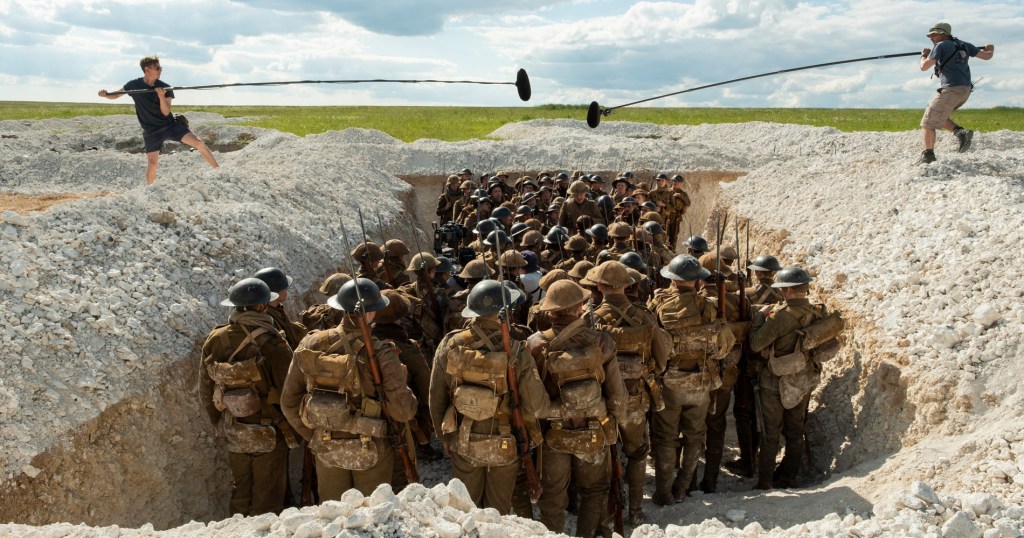
In the last full session of the academy, in the morning we watched 1917 which I thoroughly enjoyed. Especially now after being on this course and learning about the craft of filmmaking, it made me really appreciate the technical accomplishment that was achieved in the film of it making it look like it is one shot when in fact it isn’t.
After this we had a session with Yen Yau who talked to us about getting jobs in the industry. It was really encouraging hearing all of the different opportunities that exist. She spoke about skills and qualifications that will aid your chances of success in the industry such as having a drivers license, have a film qualification/degree and of course experience of making short films. She also spoke about how having a first aid qualification and being able to speak more than one language will improve your chances of success. She said as well that there will be opportunities if we keep our eyes out for opportunities to work with her on a big film production. When she came in to visit us, she had not long before finished working on the latest Bond movie, she talked about how she got a group of BFI alumni working in various different roles of the production. She shared with us as well a large list of organisations that offer courses, schemes as well as writing competitions. She spoke as well about the areas where there is a lack of talent which therefore means there is less competition for limited places. The roles that Yen explained currently had a shortage in the UK were of a huge variety. They varied from location managers to costume designers to members of hair and make up. There is also a big shortage in post production positions such as editors, sound effects and VFX positions.
The last session of the BFI film academy was the day where we got the opportunity to see how films on the big screen at the showroom. There was lots of family and friends present as well as being some local filmmakers.
Before the films were shown to the crowd, every member of the academy spoke of how much they had enjoyed the course and one thing that they had leaned. One person from each group as well gave the films a brief introduction so that the audience could have some background to what they were about to watch.
After the films had been shown all of the academy had a photo together and after the showing of the films, it was such a great feeling when people who had seen the film were giving it big praise especially when it wasn’t just coming from family and friends of the students. This was the end of the academy, it was a course that I thoroughly enjoyed and one which I am incredibly glad that I did. Although, it is the end of the academy, hopefully it is just the start of a successful career in film.
In the fifth session of the BFI academy, in the morning we had an acting masterclass. In the masterclass, we learned all about how actors interpret the script that they have. In the exercise that we did, we only had a page of dialogue, we were told that this could be all actors get in an audition. We had to pick a character from the script and we had to write briefly about what we thought their personality and status is just from that page of text.
Afterwards in small groups, we had a go at acting the page of dialogue. This is where we put into practice what we had spoke about as a group how as an actor you have to as best you can get inside the characters head and try to take as much as you can from the text provided. I believe it is something I need to develop working out from a text what a character is like. A good way for me to develop this would be by reading scripts and having a go myself at making notes of if I was an actor how I would portray the character.
In groups, we had to work together to bring the text to life in the best way possible. After the acting masterclass, for the rest of the day we in our groups had to plan for the shoot day for our short film which was only a week away. It wasn’t the most ideal preparation for our shoot because two members of my team were missing.
The three of us that were present decided we would have to make some key decisions without the input from them as we weren’t really left with much choice. Me and the rest of my group had to work together to decide which shot lists we would use for every scene. Something else that I need to learn more about is all of the different shot types that there are. Me and my group also estimated by running through the script how long our short would last. Us a group as well decided on where we would film the opening scene that is outside.
On the first full session of the BFI film academy I took part in two scriptwriting masterclasses and a production masterclass. In the first scriptwriting masterclass, Shane Meadows’ regular collaborator Paul Fraser did an exercise with us that gave us an insight into how stories are created. He also went through with us the typical outline of a film which is what we recreated in the exercise. On the tables we were sat on, we had to write a short paragraph about ourselves. We then had to pass this round where the next person would have to expand on what was written. Eventually, a problem would arise that the next person would resolve. The last person concluded everything that had been written. In this exercise in a short amount of time we created a template of a story. This exercise taught me the structure of which most films follow.
In the production masterclass, a local producer called Caroline Cooper Charles went through the extensive process of getting a film made and then subsequently actually creating it. In this exercise, I learned lots because as wasn’t aware of how much needs to be done in pre and post production. I also wasn’t aware there was a pre pre-production.
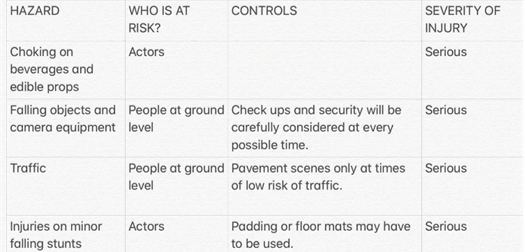
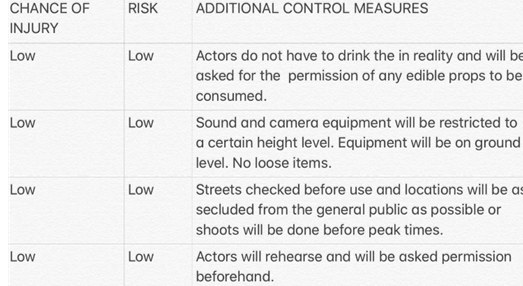
In the final exercise which was all about finding out how scripts work and how they are written. We was given a script to a short film which allowed us to see how a script is brought to life. We also analysed the short film as a group. I learned lots in this session because I wasn’t aware how much information needed to be put into a script that isn’t dialogue. Rebecca Mark-Lawson who led the masterclass informed us of a website called Celtx where you can view the scripts from famous movies. This is where I massively need to develop understanding a lot more in depth how scripts work and how to write good scripts. The best way for me to do this would be by going onto that site and reading lots of different scripts. Me as the director of the film and Dillon as the screenwriter will have to collaborate to create a script that is filled with entertaining dialogue and scenes but at the same time one which can be realistically filmed successfully. Also, it needs to be a script with which both of us and the rest of my group are happy with. Constance, the producer will have the responsibility of getting us whatever props we will require on the day and creating us a risk assessment to ensure our production is a safe one.
In the second session of the BFI film academy, it was all about cinematography. For the first part of the session, we had a masterclass on the art of cinematography and how filming works. We leaned in this session about the effect that a certain shot can have on the audience and on the film as a whole. I leaned lots in this session as I knew next to nothing about how cinematography works. For the rest of the day, we got into our groups that we are in and had a go ourselves with cameras. The guy who spent the day with our group assigned us all roles, I was assigned the role of camera man. I was shocked at how difficult is with the camera to be successful with it. The respect I have for the best cinematographers went up enormously because I realised how difficult it is to produce what you see on the big screen. We also as groups leaned how to successfully put up a camera on a trip pod and take it down.
The last part of the day was all about learning about how sound works and having a go ourselves at using microphones when recording. For the last part of the day, I was the person holding the microphone during filming. Again, I didn’t realise how difficult it were because you have to tread a fine line between picking up the best sound possible, whilst at the same time avoiding getting the microphone or the wires into the shot. We had to demonstrate good team work for the majority of the day by deciding the angles we wanted to film from and how zoomed in we wanted the camera to be. I definitely need to develop my camera skills and sound skills. The best way to do this will be my simply practising and having a go myself.
The knowledge I learned today will definitely stay with me as have learned what effect a certain angle or camera type can have on the audience. It became very clear today that every camera shot has to be closely chosen as it is has to serve some kind of purpose. The shot can convey an emotion to the audience. I do have ambitions of working in the film industry and today was a big learning curve in finding out how technical filming with a camera is. I am already quickly learning on this course how much work and detail is required from every aspect of productions. Therefore, if I want my ambitions to come true of working in the industry, I cannot neglect any aspect of filmmaking and must try to develop in all areas of it, if I am to stand any chance of making it in the film industry.
In the third session of the BFI film academy, we watched Richard Heap’s debut full feature film, the runaways. Afterwards, we had a q and a with Richard where we got valuable insight into what actually making a feature film is like and especially one on a small budget. In the q and a I learned lots of different things I never knew. I had always wondered how working with kids on film sets works and Richard provided me with a definitive answer to that. Richard explained that they could only have the kids for a restricted amount of time and had to have a teacher with them. He spoke as well about when they would forgot their lines and he would try to make them feel at ease and how he would collaborate with them for some improv. He also spoke about how for example for the filming on the steam train, how you obtain permission to do this.
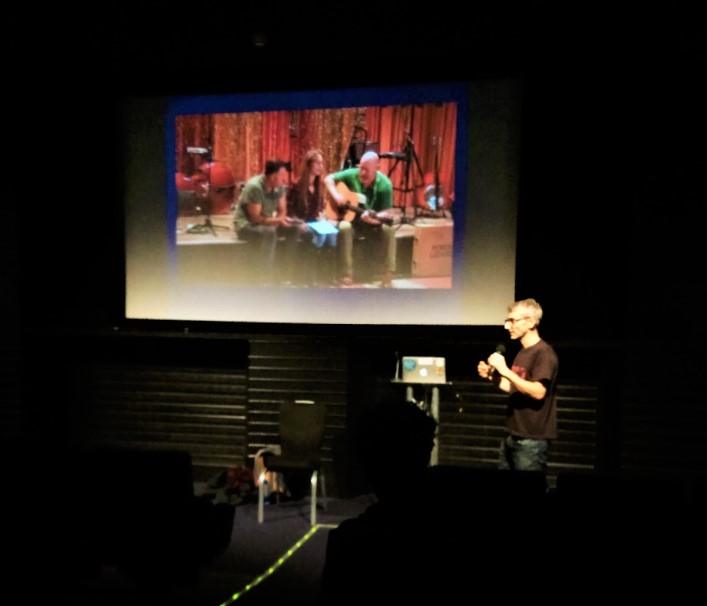
He also spoke about which was really interesting the restraints you are under during filming such as adverse weather conditions and shooting scenes with two actors who aren’t really both there together during filming to shoot that particular scene. I found listening to Richard incredibly engaging as this was someone who had made a film that was of real quality under very difficult restraints whilst having no experience himself. That’s why I believe it was so encouraging watching the film and listening to him because this is someone who before this had no previous experience of writing and directing and who had done a great job in such a short period of time. He spoke about as well the use of camera and music and the effect it has on the audience to convey a certain mood or tone. He did however as well spoke of the difficulty he is having distributing his film post production which is really discouraging because the film he had made was a really good one and featured some really well known actors. He said he believed this maybe was because no one in with any contacts or stature in the film industry had financed the film. He did say though there wasn’t really any alternative as more than likely the film would have never got made if it wasn’t for the route they took. With the quality the film possesses, it can surely only be inevitable that the film gets seen by lots of people.
Due to how engaging and educational Richards Q and A was for a budding filmmaker, I will definitely be keeping my eye out now in the future for things similar. With the amount I learned from Richard, it is clear that q and a’s and events similar offer valuable knowledge and experience for aspiring filmmakers. After the q and a, in our groups we started making progress on our ideas and script for the short film we are making. We as a group in the time we were together made great progress on the idea for our film. We had an initial idea but once we had decided on how that idea would come together, the ideas began flowing.
In the fourth session, it was all about editing. In pairs, we got the opportunity to edit ourselves. At the beginning of the session, we were told all about editing and the different ways it can be used. It was explained to us how to actually edit on the software that we were going to be using on the day of the session and when it comes to actually editing our films. In pairs, throughout the day we had a go at editing the clips that were provided and some of the filming we did on week two. In today’s session, I learned how difficult editing is because when you watch feature films, the whole film runs incredibly smoothly. However, in reality the work that needs to be done to get to that stage is massive. In my pair, we tried to make all of the clips we were editing run in an order where it would be most effective and enjoyable for someone watching it. To get to this stage, this included shortening some of the clips and taking sound out of some of it. My editing skills definitely need developing I would be very disappointed if our finished film looked anything like what I had edited at the end of this session. Although, saying that we were limited with what we could do with the clips and when we are filming we have the freedom to do what we want.
 Josh Allott Director's Blog